


This is a new series for paid subscribers, highlighting multi-shaft weaving patterns and drafts often inspired by my artist practice. This post is free — oh, enticing! — to give you a window into the series.
The goal was simple: nothing complicated, just weave. It had been a few months since I was able to sit at the loom and my mind was craving a reset. I needed the meditative dance of hands, yarn, shuttle, loom, body, and breath. I approached the loom as I often have during these moments: I chose a nearby yarn (8/2 cotton), I opened my go-to book for 8-harness patterns (A Weaver’s Book of 8-Shaft Patterns), and I found a draft that interested me. I kept the warp relatively small, the quickest route to dressing with ease and getting to the actual weaving process.
Most of my work has a high level of intuitive creating at the loom, and I often push the boundaries of the woven grid by drawing with thread. These “drawings” are part of a ritual to remember landscape, exploring fragmented places in my memory that only linger as remnants.
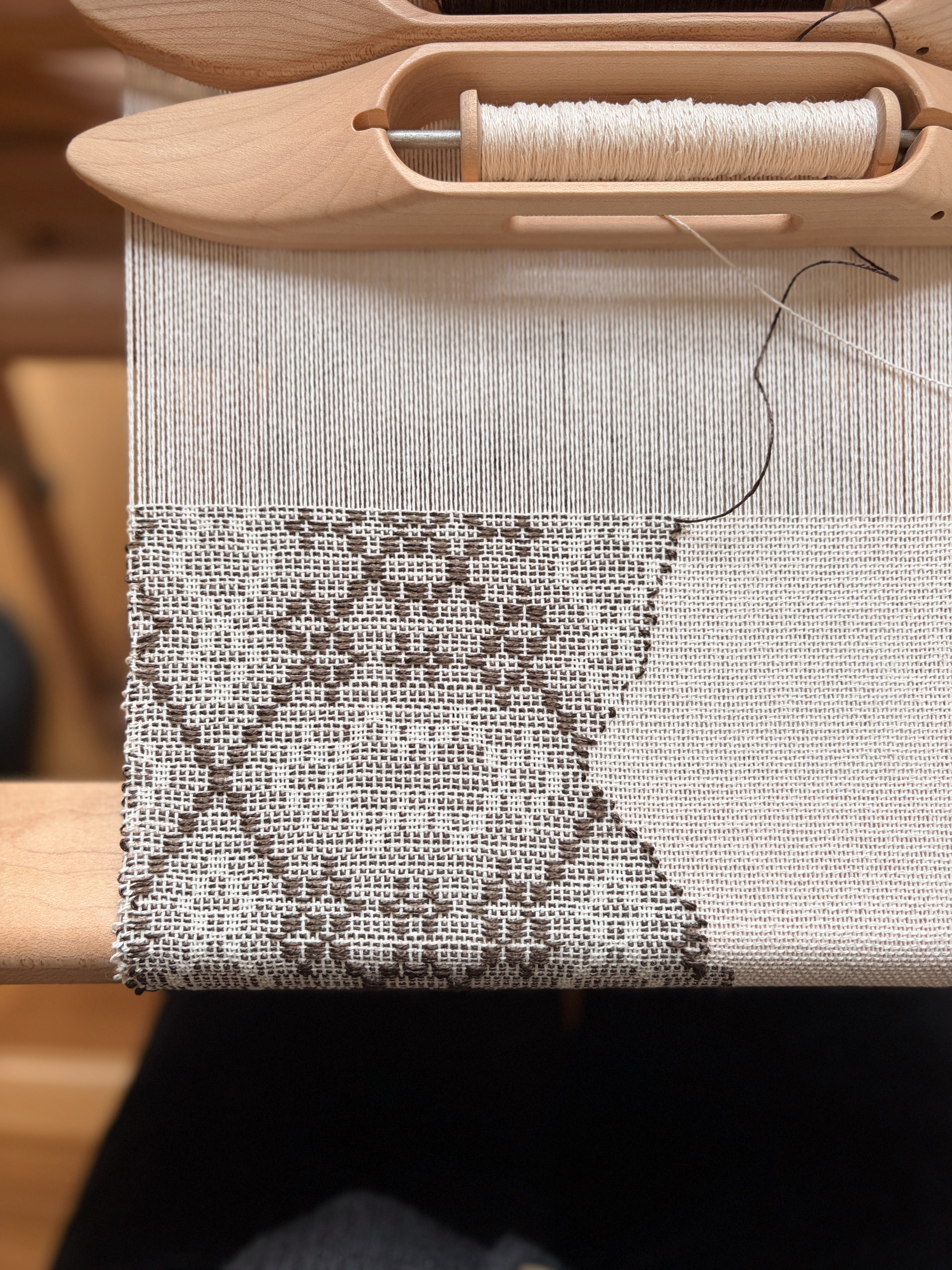
I start by weaving one full repeat of the pattern for a few reasons — most notably, this allows me to enter a flow state and also familiarize myself with the structure. When I am ready to start drawing, I know how the repeat works and where the blocks of the overshot intersect. Sometimes the first repeat becomes part of the final weaving, as it did with this piece. If I find that I don’t enjoy weaving the pattern, I can also decide to create my own after I’ve tested it.
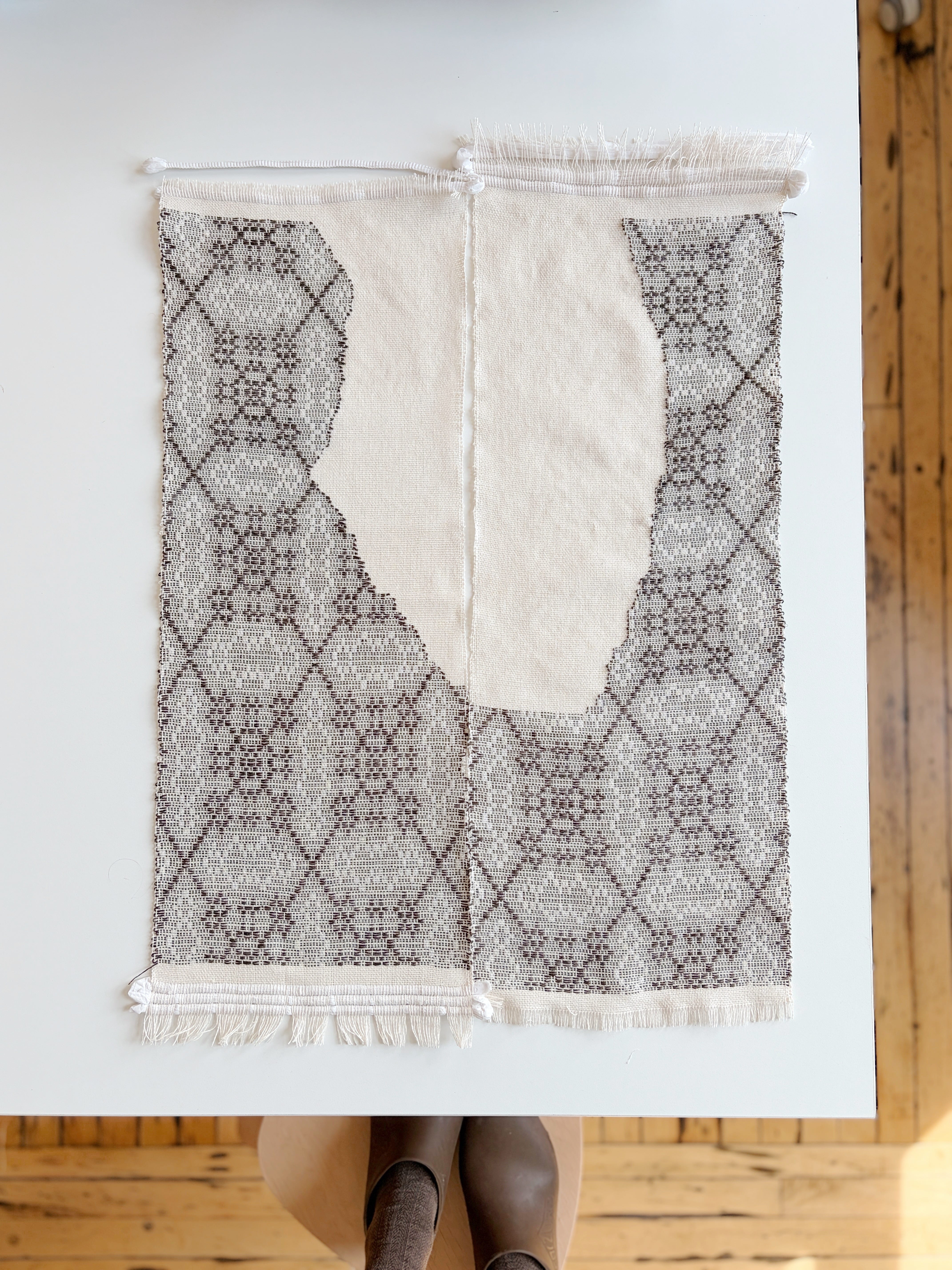
Once I started weaving, I realized the pattern would be better suited for a larger piece and decided to weave two panels that could be sewn together or displayed side-by-side. Although I measured, the panels are not in complete alignment, which I particularly love — these small imperfections are the mark of the hand, forever preserving my touch; a woven signature.
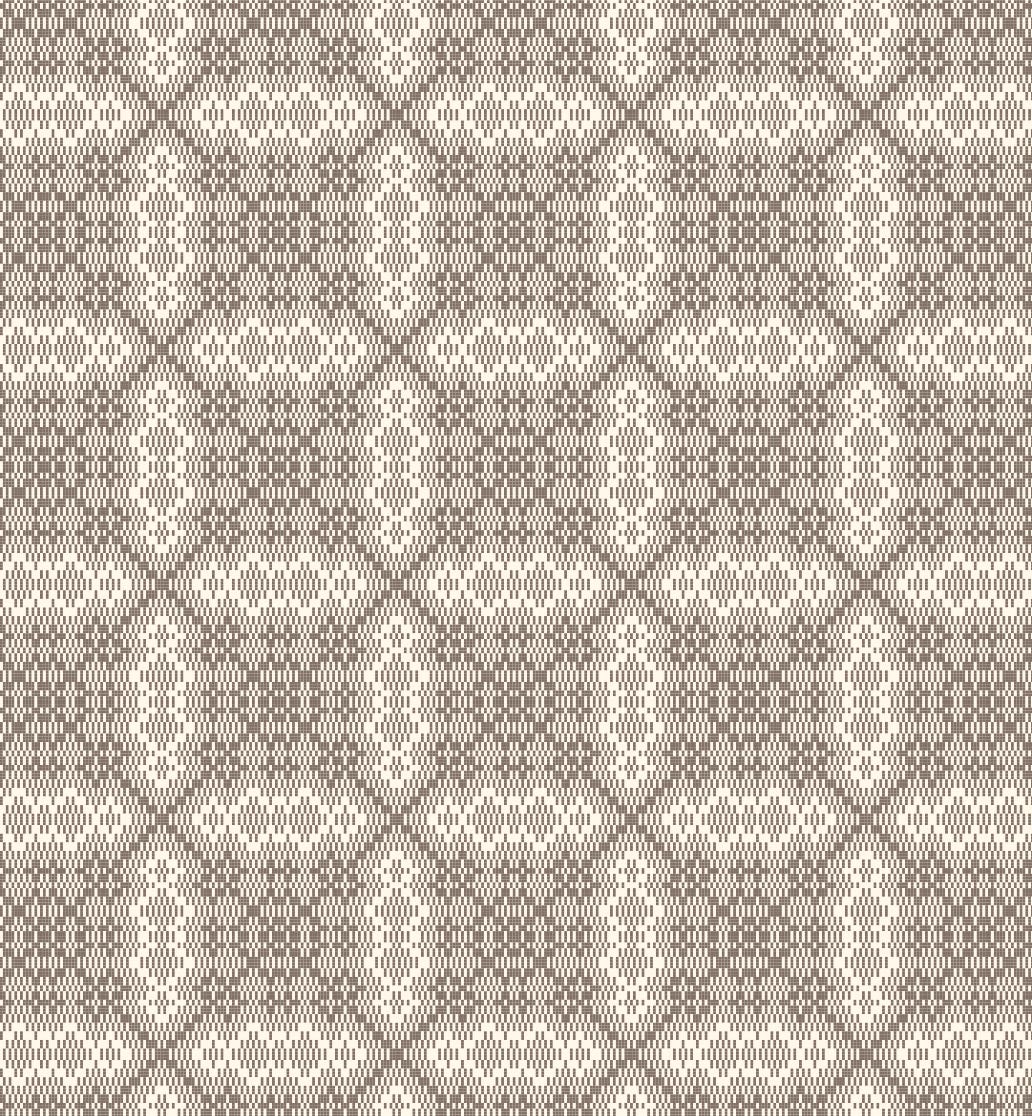
This pattern was found in A Weaver’s Book of 8-Shaft Patterns: From the Friends of Handwoven by Carol Strickler, on page 131. It is pattern #483 by Ilse R. Sonner. You can download a .pdf below, which includes the cloth view, threading, treadling, and tie-up for one repeat. This is an overshot draft and tabby is implied — the tabby treadles are shown in the tie-up but not in the treadling sequence.
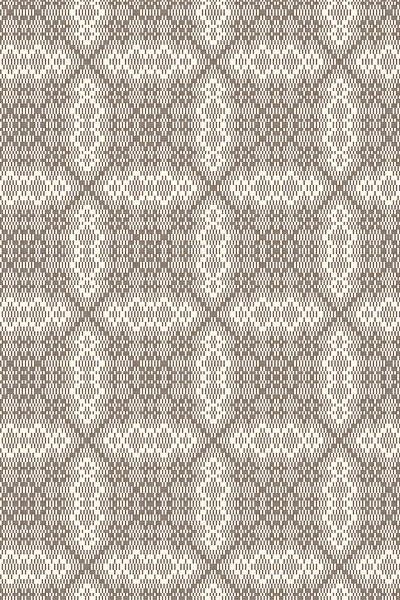
If you’re a paid subscriber, you can also access a Dropbox folder with the WIF. If you’re new to weaving and curious to learn more WIFs, you can read this post: what is a .wif and how do I use it?