grid painting
color theory, pattern and woven design

Before I learned to weave, I learned to paint. My mother enrolled me in private art lessons at a young age, and eventually I ended up in the basement of Jan Calaski— Mrs. C.
Going to Mrs. C’s was the highlight of my week. I would always hold my breath in anticipation as I walked through her front door, down the hallway and into the kitchen, and then down the stairs into her makeshift studio. It was an ordinary basement mainly used for storage, but to the right of the stairs was an alcove with a long table littered with art supplies. Covering every inch of the walls behind the table were photocopies of past and present student artworks.
At Mrs. C’s, a small group of us would sit around the table, occasionally sampling mini Tootsie Rolls, quietly focused on creating for an hour after school. It was heaven. There I learned how to properly draw and use watercolor paints, and I soon fell in love with the medium. When I applied to The School of the Art Institute of Chicago my senior year of high school, I wanted to be a painter.
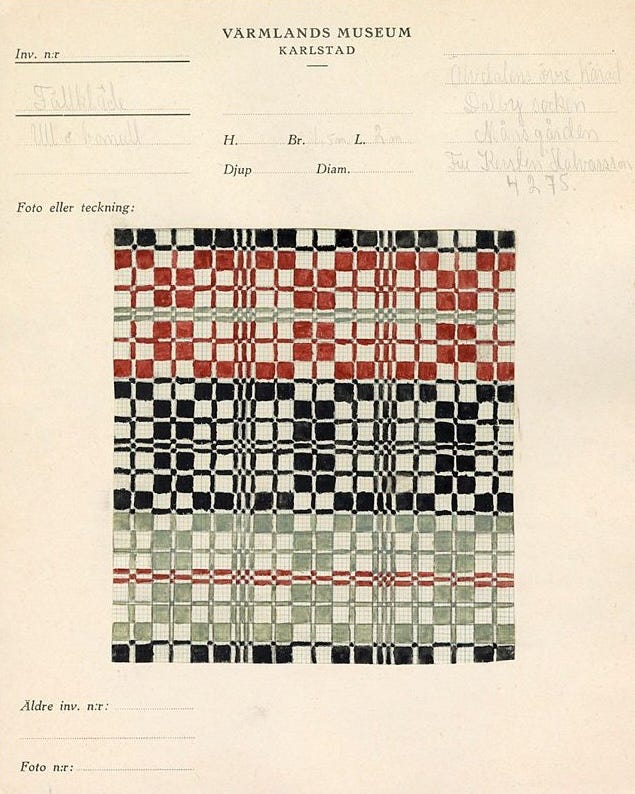
Falling in love with the process of making textiles was instantaneous, but fully understanding the magnitude of its history took years to unfold. I have a deep connection to the tactility of cloth, but there is also beauty in the drafts and grid patterns that inform the methodology.
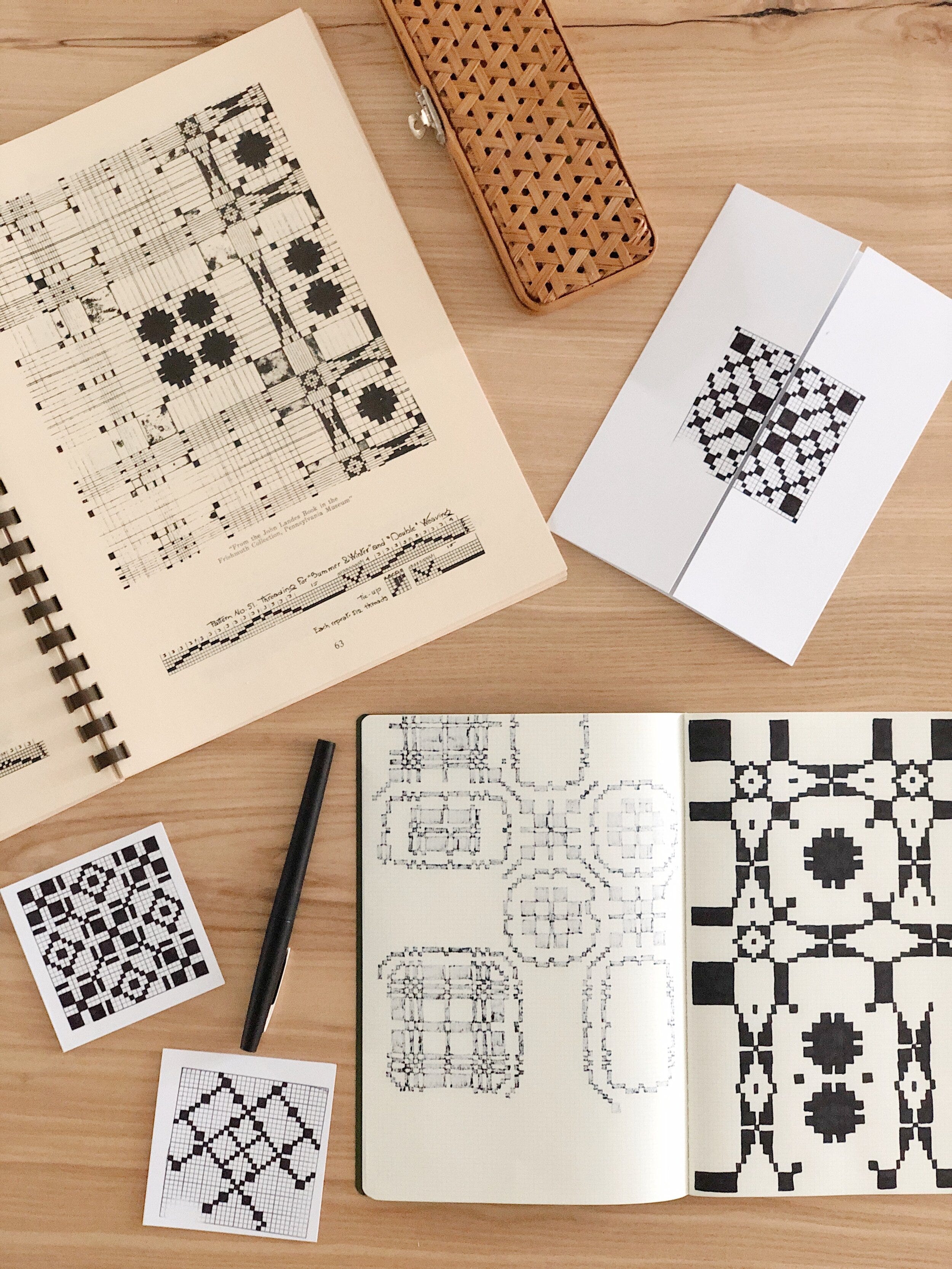
My sketchbook has always been important to my art making, but during the pandemic (while I was away from my loom) I began drawing weave structures and grid patterns as a form of meditation. This started in my sketchbook — I particularly love kleid notebooks, which we used to sell at Weaver House — and then moved to watercolor.
It was around this time that I started hunting for vintage grid stamps on ebay, as a quick way to create a grid on watercolor paper. These stamps are often small and I needed to stamp multiple grids next to each other in order to paint the design I envisioned. The stamped grids didn’t always line up or accidentally overlapped, a small detail I particularly loved. Similarly to my woven artworks, small imperfections or the ‘mark of the hand’ are celebrated.
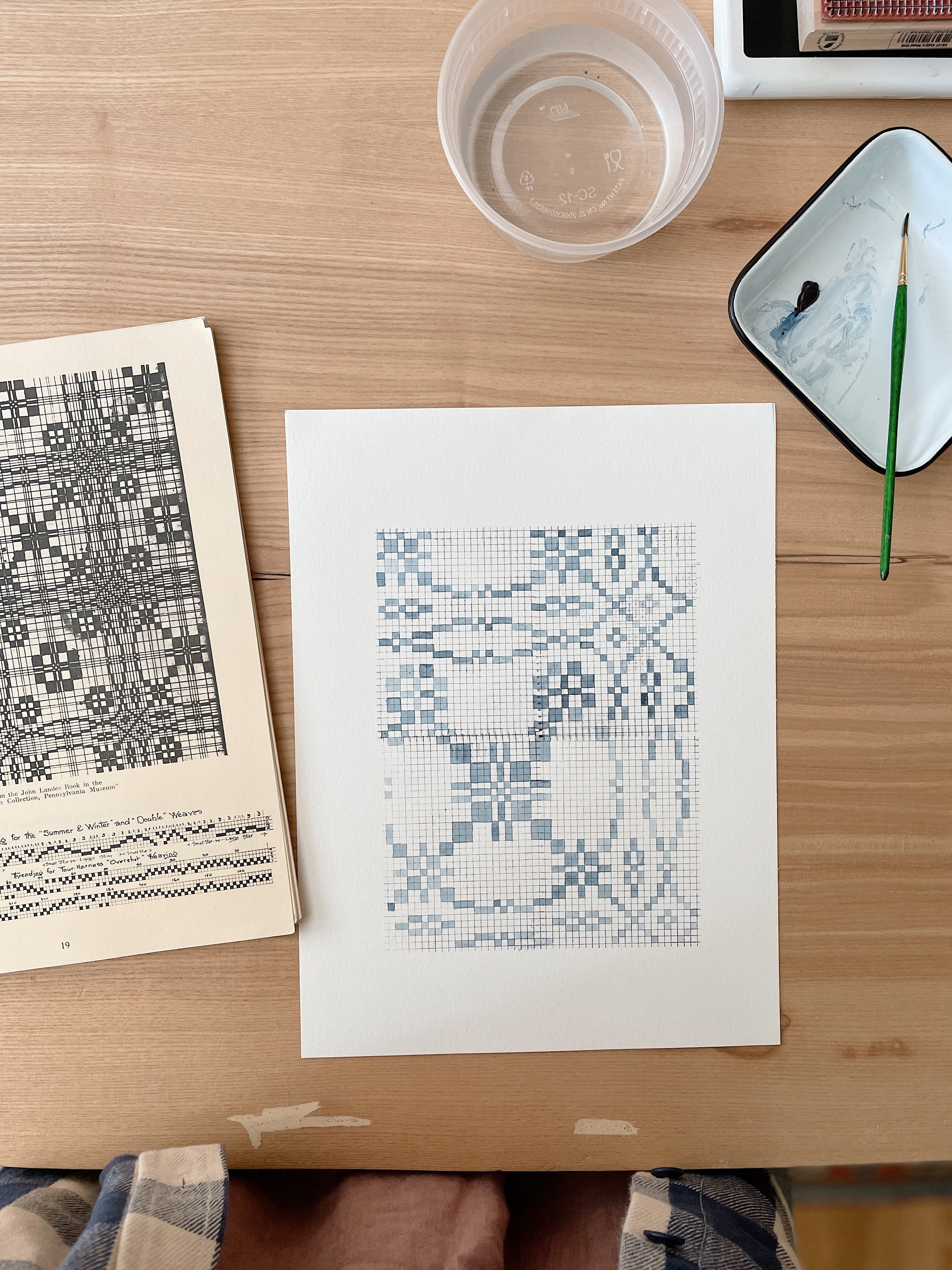
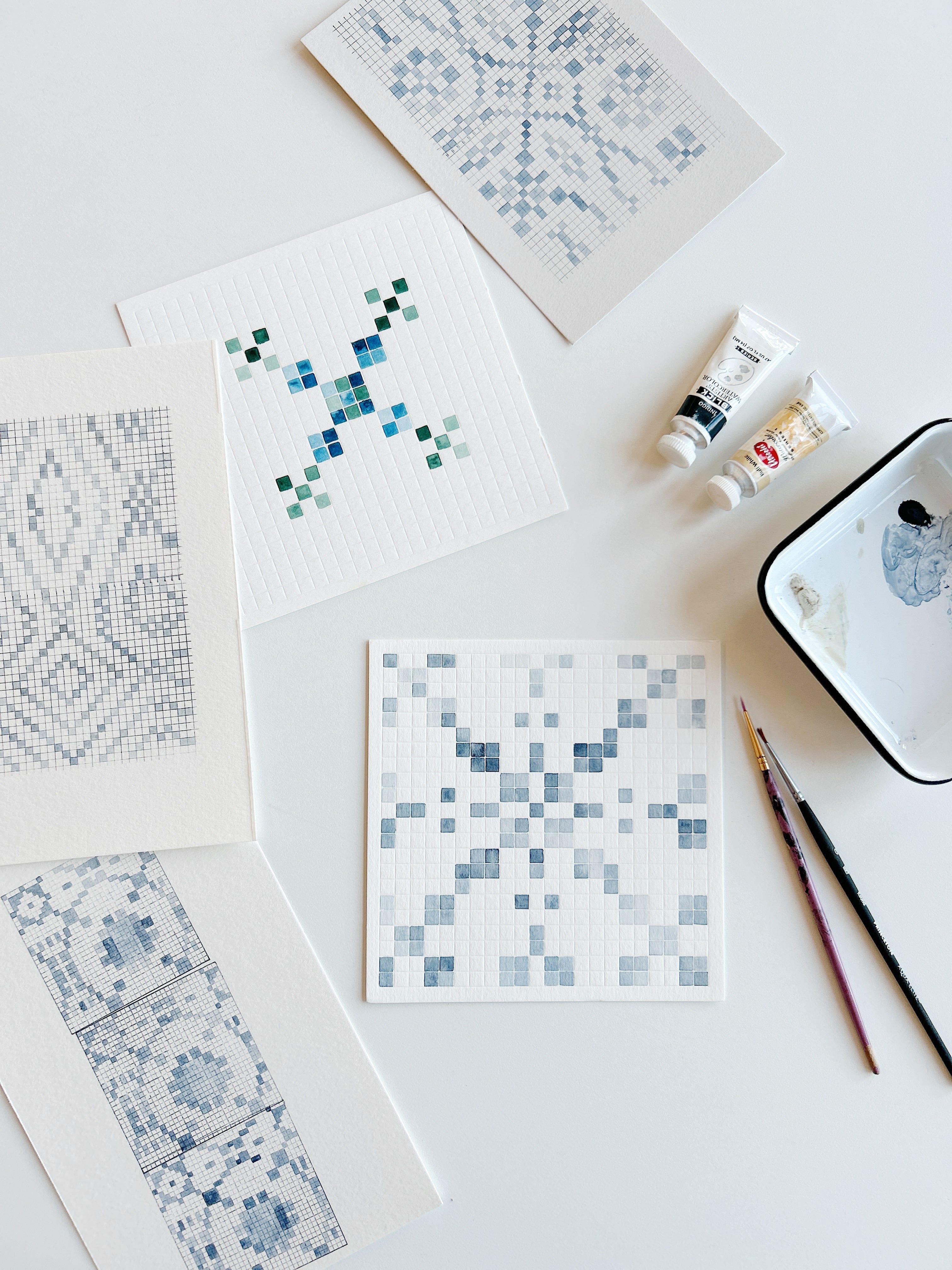
I view these paintings as a separate part of my practice, although they could easily be used to explore color theory and design as part of the weaving process. Using drawn or painted renditions of weave structures is often seen historically within textiles, craft and fine art.
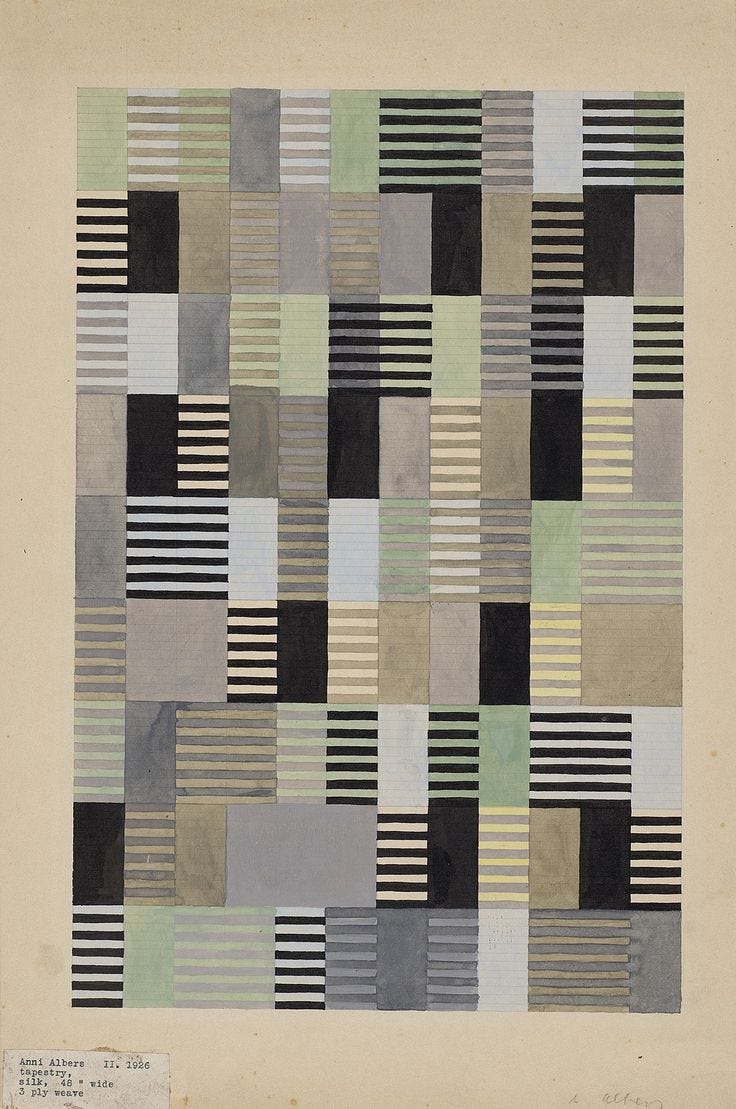
Weavers Gunta Stölzl and Anni Albers are top of mind examples of this way of working, as both utilized painted grids to inform their woven textiles. Stölzl and Albers studied at the Bauhaus, and Stölzl played an integral part in developing the weaving studio there. Stölzl mentored Albers for a time, and when she departed the Bauhaus in 1931, Albers took over the studio.
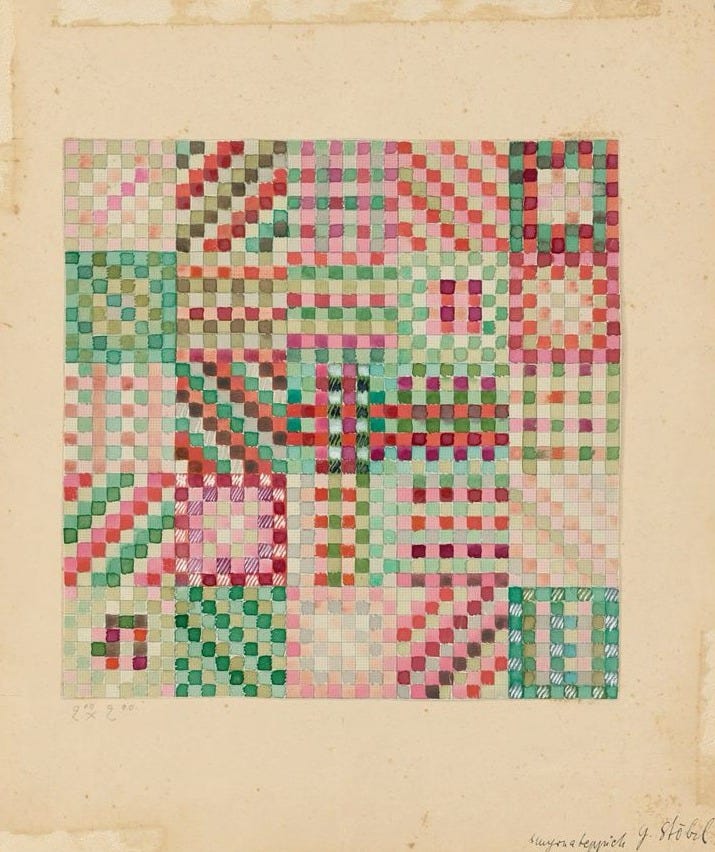
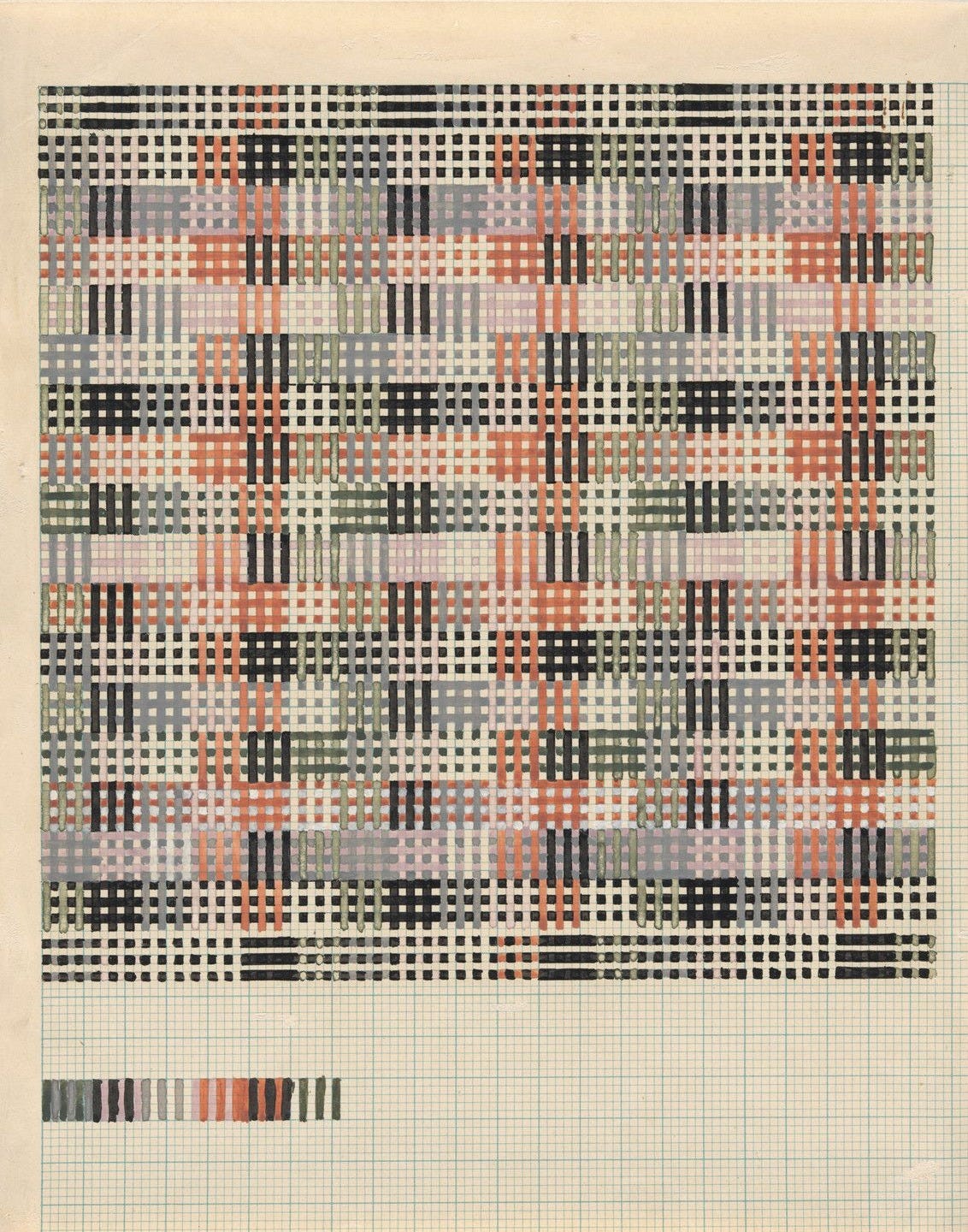
Both women are known to be pioneers within the textile world for pushing the boundaries of what could be considered “art” versus what was relegated to merely “craft”. Often creating artworks that could also be translated into interior textiles, the design process and their grid paintings have become an irrevocable part of their legacies. For me, I see the link between paper and cloth as a conversation, and a way to further document and explore what is discovered while creating on the loom.